
The Gap Nobody Talks About
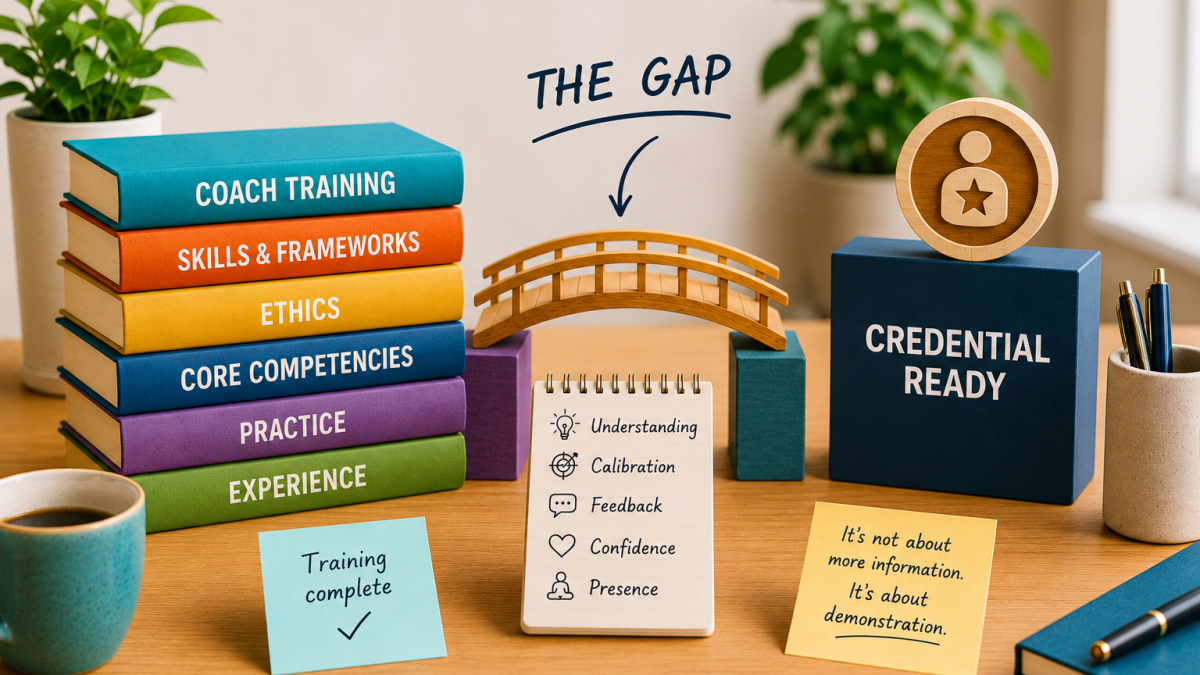
Many coaches invest significant time, money and energy in their coach training.
Some complete a Level 1 or Level 2 programme. Others train through independent coach training schools, specialist coaching programmes, corporate coaching qualifications or professional development courses.
They attend workshops, complete assignments, practise coaching and often leave feeling excited about the difference coaching can make.
Yet when it comes to applying for an ICF credential, many discover they still don’t feel fully prepared.
This isn’t a criticism of coach training providers. In fact, many programmes do an excellent job of teaching coaching skills and helping coaches build a solid foundation.
The issue is that completing coach training and being credential ready are not always the same thing.
Training and Credentialing Serve Different Purposes
Most coach training programmes are designed to help coaches learn how to coach.
They introduce coaching principles, ethical practice, listening skills, powerful questions and coaching frameworks. They help coaches develop confidence and begin finding their own style.
Credentialing serves a different purpose.
The ICF credentialing process is not assessing whether you have attended training or whether you understand coaching concepts in theory. It is assessing whether you understand and can consistently demonstrate the ICF Core Competencies in a real coaching conversation.
There is often a gap between understanding coaching and demonstrating coaching at the level required for credentialing.
The Gap Many Coaches Experience
Over the years, I have worked with coaches from a wide range of training backgrounds.
Some completed ICF-accredited programmes. Others trained through excellent independent schools. Some have been coaching successfully for years before deciding to pursue a credential.
Despite their different backgrounds, many share similar concerns.
They wonder:
- What are assessors actually listening for?
- How do the competencies show up in a real conversation?
- What is the difference between understanding a competency and demonstrating it consistently?
- How do I stay present when I know my coaching is being evaluated?
- How do I trust myself enough to coach naturally rather than trying to sound like a coach?
These are not knowledge problems.
More often, they are calibration problems.
Why Coach Mentoring Matters
This is where coach mentoring can make such a significant difference.
Coach mentoring is not about teaching coaches how to coach all over again.
It is about helping them understand how the competencies show up in practice, recognise what is already working, identify what may be getting in the way and develop greater confidence in their own coaching.
Many coaches discover that the challenge is not a lack of skill. It is a tendency to overthink, second-guess themselves or focus so much on passing that they lose touch with the natural qualities that make coaching effective.
Presence, partnership, curiosity and trust are difficult to perform on demand.
They tend to emerge when a coach has a deeper understanding of what great coaching actually is.
Beyond Training
Completing a coach training programme is a significant achievement but it is often the beginning rather than the end of professional development.
The strongest coaches I know continue to refine their practice long after their initial training is complete. They stay curious; they seek feedback;they reflect on their coaching and continue learning from experience.
Credential readiness is rarely about accumulating more information.
More often, it comes from developing a deeper understanding of the competencies and learning to trust yourself enough to let your coaching emerge naturally.
A Reflection for you…..
If you are considering an ICF credential, or perhaps wondering why the process feels more challenging than you expected, take a moment to reflect:
What would help you feel genuinely credential ready?
Would it be more training?
Or would it be a deeper understanding of how effective coaching actually shows up in coaching conversations?
The answer may point towards the next stage of your development as a coach.
Until next time
Cath
P.S. You don’t need another qualification to become credential ready. You may simply need greater clarity, calibration and confidence in your coaching. If you’re working towards an ICF credential and would like support, book a discovery call here and let’s explore where you are and what would help you move forward.
